
Dependable Illumination When Conditions Deteriorate
Emergency Lighting & System Testing in Sanford for workplaces and facilities requiring reliable egress lighting during power disruptions
Exit routes remain visible and occupants evacuate safely only if emergency lighting activates correctly when normal power fails, a scenario that occurs during storms, equipment failures, or utility interruptions common in Maine and New Hampshire. On-Pointe Electric LLC provides emergency lighting and system testing in Sanford, Portsmouth, Epping, and surrounding areas, covering commercial properties, industrial facilities, and operational spaces where dependable illumination matters during evacuations. Emergency lighting systems include battery-backed fixtures, exit signs with integral power supplies, and central inverter systems that maintain selected circuits during outages, all requiring periodic testing to confirm readiness before actual emergencies occur.
This service involves testing battery charge levels, verifying that fixtures illuminate when normal power is interrupted, measuring illumination levels along egress paths, and identifying electrical or equipment issues before they compromise system performance. Testing also includes documenting fixture operation and noting components requiring replacement due to degraded batteries, failed lamps, or electrical faults affecting charging circuits.
Schedule system testing to identify electrical issues and verify emergency lighting readiness across your facility.
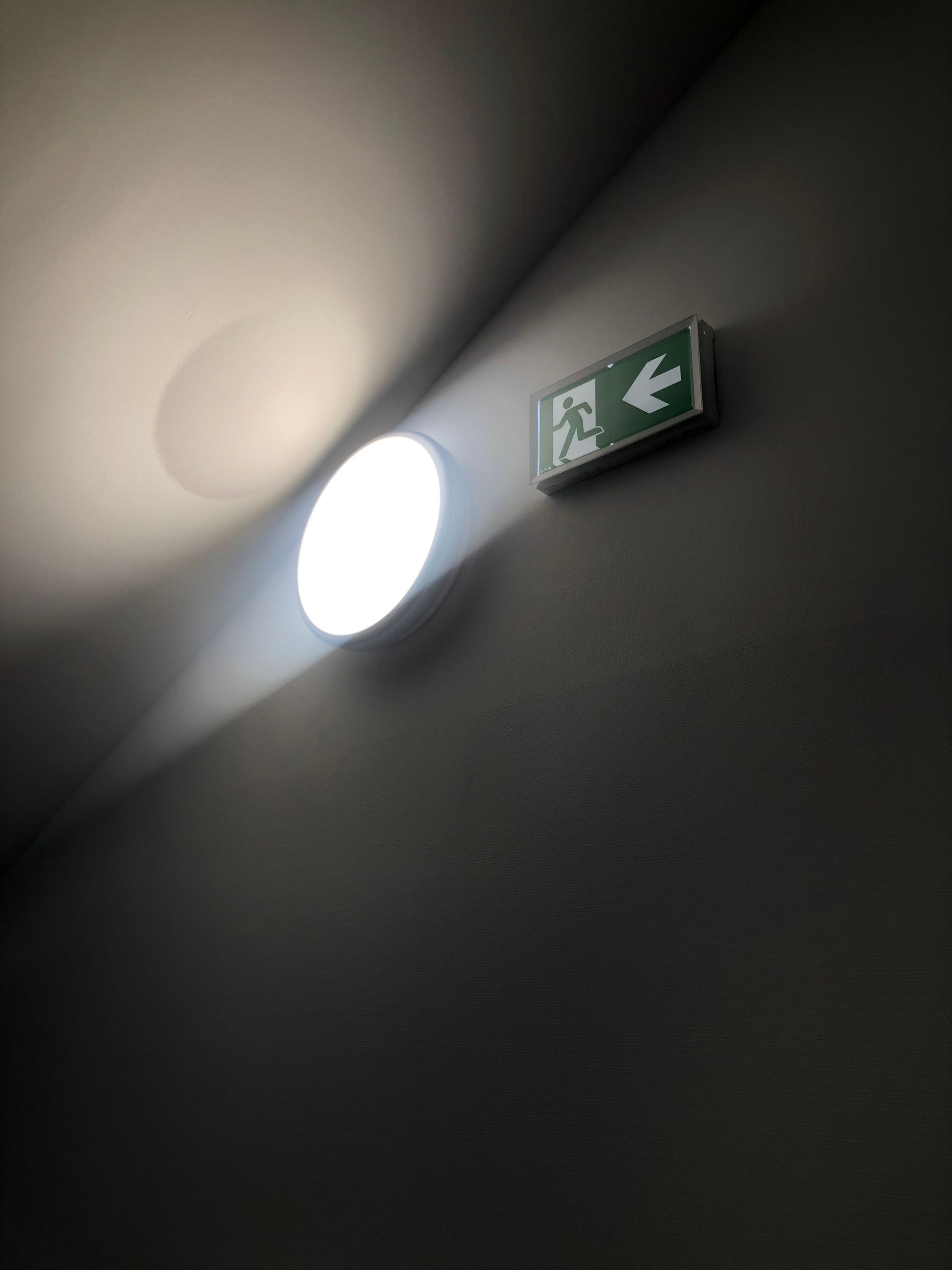
What Emergency Lighting Testing Actually Accomplishes
Emergency lighting tests involve disconnecting normal power to individual fixtures or entire circuits, observing whether battery-backed lights activate immediately, and timing how long illumination persists to confirm batteries maintain required capacity. The process includes checking exit sign brightness, measuring light levels along corridors and stairwells with a light meter, and inspecting electrical connections between fixtures and charging sources. Testing identifies batteries that no longer hold adequate charge, fixtures with failed lamps or ballasts, and electrical faults preventing proper charging between tests.
After testing and any necessary repairs are completed, emergency fixtures activate instantly when power is interrupted, illumination persists for the required duration, and exit routes remain clearly visible throughout the facility. Regular testing also extends equipment life by identifying aging components before complete failures occur, allowing planned replacements during normal business hours rather than emergency repairs during actual outages.
Emergency lighting maintenance includes replacing batteries approaching end-of-life, repairing charging circuits affected by electrical faults, and upgrading fixtures in areas where measured illumination falls below required levels. This organized approach maintains code compliance and ensures systems function correctly when power failures occur unexpectedly, preventing situations where occupants must evacuate through inadequately lit spaces.
Common Questions About This Service
Facility managers responsible for occupied buildings often ask practical questions about emergency lighting and testing procedures.
How often does emergency lighting require testing?
Most jurisdictions require monthly brief tests to verify fixtures activate correctly and annual extended tests to confirm batteries maintain capacity for the required duration. Testing frequency may increase in facilities with critical occupancies or where previous tests revealed chronic issues requiring closer monitoring.
What causes emergency lighting systems to fail during actual outages?
Common failure modes include batteries that no longer hold charge due to age or inadequate maintenance charging, lamps or LEDs that have burned out since the last test, and electrical faults in charging circuits preventing batteries from reaching full capacity between tests. Environmental factors like extreme temperatures in unconditioned spaces also accelerate battery degradation and reduce available runtime during outages.
Why do facilities in Maine and New Hampshire experience specific emergency lighting challenges?
Utility interruptions occur more frequently during winter storms and severe weather events common in this region, making emergency lighting reliability particularly critical when extended outages coincide with occupant evacuations. Temperature extremes in unconditioned spaces also affect battery performance and charging efficiency, requiring installations designed for environmental conditions beyond typical indoor ratings.
What happens during emergency lighting system testing?
The electrician disconnects normal power to each fixture or circuit, verifies immediate activation, measures illumination levels at floor height along egress paths, and times how long fixtures remain lit to confirm battery capacity. The process includes documenting results for each fixture, identifying components requiring attention, and providing facility managers with a clear assessment of system readiness.
How does testing reduce long-term maintenance costs?
Identifying aging batteries and failing components during scheduled tests allows planned replacements before complete failures occur, avoiding emergency service calls during actual power outages when replacement parts may not be immediately available. Regular testing also extends fixture life by catching electrical faults that cause premature component failure if left unaddressed.
On-Pointe Electric LLC tests emergency lighting systems for commercial and industrial facilities throughout Sanford and surrounding areas, identifying issues before they affect occupant safety during actual emergencies. Arrange an evaluation to review your facility's emergency lighting and schedule comprehensive system testing that documents readiness and identifies maintenance needs.